Why Discount Rates in Commercial Real Estate Remain Steady Despite SELIC at 14.25%?
- Despite the basic interest rate reaching 14.25% in April 2025, investors remain focused on fundamentals such as indexed contracts, tenant quality, and income stability—keeping discount rates virtually unchanged

In April 2025, Brazil’s Central Bank pushed the SELIC rate to 14.25%, marking the peak of the country’s latest monetary tightening cycle. Traditional financial logic would suggest that such a high interest rate should increase discount rates in real estate valuation models, leading to lower property values. Yet, in Brazil’s commercial real estate sector, that correlation hasn't played out.
“Despite the high SELIC, we haven’t seen a proportional adjustment in return expectations or pricing across commercial property segments,” explains Marco Ribeiro, Director at Capright, a multinational real estate valuation and advisory firm. “Investors in this space are looking beyond short-term monetary movements and focusing on long-term fundamentals.”
Not All Models Apply to Real Estate
While models like the Capital Asset Pricing Model (CAPM) are prevalent in corporate finance, they don’t translate directly to real estate. Real estate assets are underpinned by physical occupancy, lease contracts, and income-producing potential — factors less reactive to market volatility.
“Real estate valuation is about income durability, not just interest rate sensitivity,” Ribeiro notes. “Our clients are more concerned with tenant quality and lease structures than with the headline SELIC number.”
A Transitory View of the SELIC
One of the main reasons for the steady discount rates is that the market views this high SELIC level as temporary. Many institutional investors interpret the Central Bank’s move as a tactical response to inflation — not a lasting shift in capital costs.
“Most real estate players believe that once inflation stabilizes, rates will follow suit. So repricing assets based on a spike that’s viewed as cyclical would be premature,” says Ribeiro.
Segment-Specific Strength
Each segment of the market has exhibited resilience in its own way:
- Retail: Shopping centers have seen recovery in foot traffic and sales, aided by tenant repositioning and leases with inflation-indexed and variable rent components. These dynamics have supported cash flows even in a high-rate environment.
- Offices: In prime São Paulo locations, long-term leases with inflation-adjusted rents and tight vacancy levels have helped sustain income and return expectations.
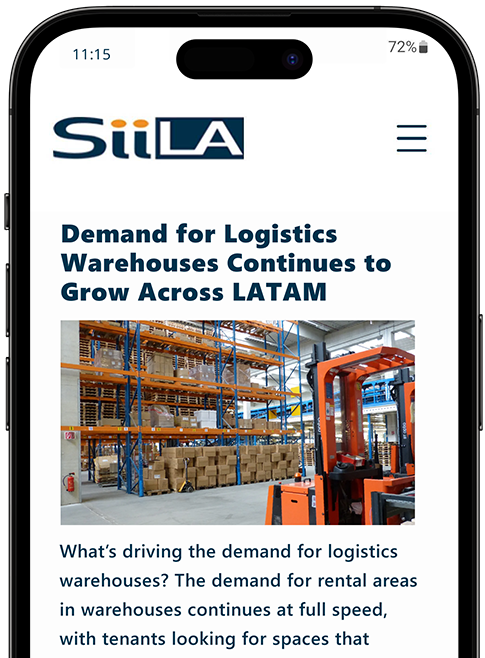
- Logistics: Distribution centers continue to benefit from strong demand driven by e-commerce and nearshoring. “High occupancy, long lease terms, and strong tenants reduce the perceived risk — even when fixed income returns are higher,” Ribeiro explains.
Inflation as a Buffer
Between 2021 and 2024, Brazil faced cumulative inflation that directly impacted lease revenues. Since most commercial contracts are indexed to inflation, projected cash flows have risen, helping preserve asset values in DCF models.
“Inflation plays a double role: it justifies the SELIC hike, but it also lifts cash flows. That’s why, despite nominal rate increases, real estate hasn’t lost its investment appeal,” Ribeiro says.
Real Rates and Long-Term Perspective
Investors often look at real interest rates — the SELIC adjusted for inflation — which have stayed within historically acceptable ranges. Combined with the long-term nature of real estate investments, this has encouraged a strategic rather than reactive approach.
“What we’re seeing is discipline. The market is holding firm, not chasing short-term volatility but betting on the resilience of well-located, income-generating assets,” concludes Ribeiro.
The Bottom Line
The Brazilian commercial real estate market remains anchored in fundamentals, not just monetary cycles. With inflation-linked leases, low vacancy in prime assets, and strong tenant demand in logistics, investors are taking the long view — and keeping their discount rates steady, despite the SELIC surge.